In the 21st century, we live in a world that never really switches off. Messages arrive instantly, shopping arrives the next day, television streams endlessly in the background, and bills quietly pay themselves without us even thinking about them ...
The modern fear of being forgotten is a prevalent concern in a constantly connected world
Modern life is designed for convenience, automation and independence. In many ways, it is brilliant. But beneath all that convenience lies a quieter, more uncomfortable truth: it has become surprisingly easy for people to fade into the background of everyday life.
Not dramatically. Not mysteriously. Just quietly!
Years ago, daily life naturally created regular human contact. People worked in offices, visited local shops, answered landline phones and saw neighbours more often. The milkman stopped off for a quick chat in the morning, the coalman always waved hello from his wagon, and the dustmen actually walked up driveways to collect the bins. If someone suddenly vanished from their usual routines, people tended to notice fairly quickly.
Today, many people work remotely, order food online, manage friendships digitally and can easily go several days without speaking to another person directly. For some, that independence feels peaceful. For others, it can slowly become isolating without them even realising it.
The difficult part is that loneliness no longer looks the way people expect it to. Someone can have active social media accounts, group chats full of messages and plenty of online interaction while still spending long stretches of time physically alone.
Modern communication keeps us connected in many ways, but it can also create the illusion that somebody else is checking in when often nobody really is. Research and charities across the UK continue to highlight growing concerns around loneliness, remote working and social isolation in modern life.
That does not mean independence is a bad thing!
Far from it. For many, living alone, working remotely and enjoying your own space can be a fulfilling and empowering choice. The problem is not independence itself. The problem is becoming invisible without meaning to.
That is why simple systems of reassurance matter more than ever. Not surveillance. Not panic alarms. Just a quiet modern way of making sure somebody notices if something feels unusual.
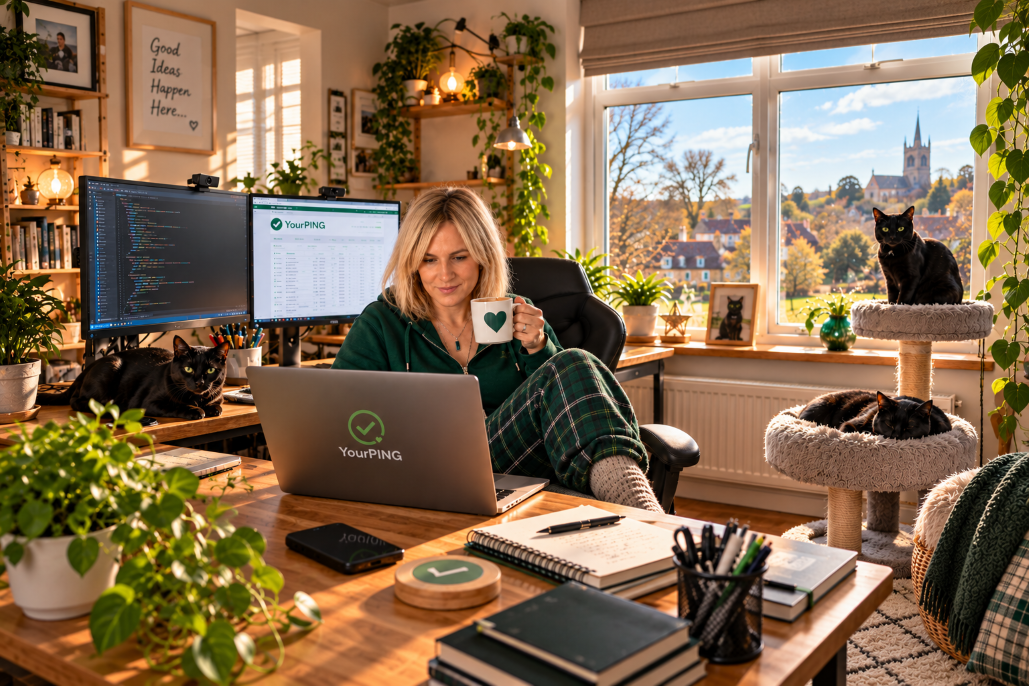
YourPING was created around that idea. A simple daily check-in using browser notifications, text messages and email reminders designed for modern independent living. No complicated gadgets, no wearables and no dramatic fuss. Just a calm layer of reassurance sitting quietly in the background of everyday life.
Because in a world that is always connected, nobody should feel forgotten.
Until next time ...
STEFFI LEWIS Founder & Creator of YourPING
Would you like to know more?
If this blog post resonates with you, it may be worth taking a look at how YourPING works and the quiet reassurance it offers. Visit our homepage to discover more. Because someone should notice if you don't check in.
Based in the charming village of Hanslope in Buckinghamshire, UK, I bring over 30 years of experience in web development. From creating my first website for the Open University in 1993, through being part of the dot com boom, to my explorations in SaaS and AI over the last few years, my journey has been a rich tapestry of web projects, big and small, both funded and bootstrapped.
YourPING was created around a very modern idea: in a world of remote work, automated living and digital communication, it has become surprisingly easy for people to quietly drift off the radar. Bills are paid automatically, shopping arrives online and many people can go days without speaking to someone directly, even while remaining connected to the world through screens and social media.
Designed as a calm and supportive daily check-in system, YourPING helps provide quiet reassurance for people who live alone, work remotely, travel frequently or simply value their independence. Using browser notifications, SMS backup alerts, email escalation and trusted contacts, the platform is intentionally simple to use without complicated gadgets, wearables or intrusive monitoring.
At its heart, YourPING is not about fear or surveillance. It is about modern independent living and the simple comfort of knowing that if something feels unusual, somebody will notice.
My head is in the cloud, my heart belongs to the web, and my soul is filled with such beautiful code 💚
Life gets busy, and even simple things can slip our minds. You might be enjoying a long conversation with a friend, working in the garden, watching a favourite television programme, or having a well-deserved afternoon nap. So...
Charities and community groups do extraordinary work supporting people who might otherwise feel isolated, overlooked, or disconnected. Whether helping older people remain independent, supporting vulnerable adults, looking out...
Most of us have small routines that shape our everyday lives. We wake up around the same time, make a cup of tea, check our messages, or let someone know we've arrived home safely. These small habits might not seem particular...
Late last year, I read an article in The Guardian about Joyce Vincent, a woman who died alone in her London flat and wasn't discovered for more than two years. It stayed with me ......
Choosing trusted contacts may sound straightforward: pick someone you know, add their details, and you're done. But it's worth thinking a little more about the decision. A trusted contact isn't there to monitor someone or tak...
Caring about someone often comes with a quiet background worry. Are they OK? Have they eaten? Did they get home safely? Are they having a good day? When someone you care about lives alone or simply values their independence, ...
Living independently can bring a wonderful sense of freedom. Having your own space, making your own decisions, and choosing how you spend your day are all important parts of maintaining independence, no matter your age or cir...
YourPING daily check-ins answer one simple question: Are you, or someone you care about, OK? They do that without requiring an app, special equipment or constant daily phone calls ......
Overseas visitors seeking a base in Milton Keynes will find we offer an exceptional range of serviced accommodation tailored to their needs. Discover ...
Life doesn't always go according to plan, does it? Sometimes events happen that completely knock us off course, whether that's redundancy, a business ...
The rules surrounding Inheritance Tax on pensions are changing in 2027, and anyone hoping to leave their pension savings to loved ones should be aware ...
When you're looking at potential property investments, it's easy to get caught up in the asking price. But understanding how much to pay for an invest ...
YourPING is a UK-based, non-medical check-in service designed to help people stay connected with trusted contacts and support networks. It is not a medical service, emergency response system or replacement for healthcare, emergency services or human welfare checks. YourPING should not be relied upon as the sole means of monitoring a person's safety or wellbeing.
Notifications, emails, SMS messages and push alerts may be delayed, interrupted, filtered or fail because of internet or mobile network availability, device settings, third-party providers, maintenance, software faults or other circumstances outside our reasonable control. Trusted contacts are nominated by users and act independently. YourPING cannot guarantee that a check-in, notification or contact attempt will always be successfully delivered or acted upon.
Some content and imagery on this website may be created or assisted by artificial intelligence. Such content is provided for general information and should not be treated as medical, legal or other professional advice. Website content, branding, software and media are protected by applicable copyright and intellectual property rights.
The YourPING Foundation CIC is a Community Interest Company registered in England and Wales (No. 17495853)