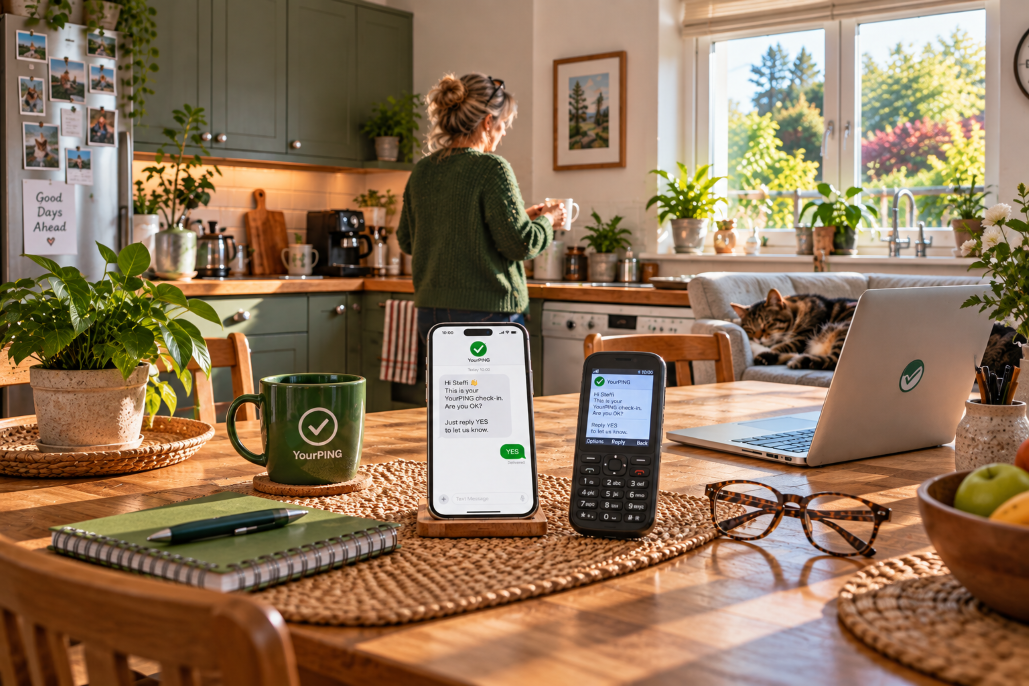
How YourPING daily check-ins work: From check-in to reassurance
YourPING daily check-ins answer one simple question: Are you, or someone you care about, OK? They do that without requiring an app, special equipment or constant daily phone calls ... How YourPING daily check-ins work: From check-in to reassurance keeps you updated each day Once everything is set up, the person being checked in on receives a simple SMS at their chosen time. They respond; YourPING records the check-in and, in most cases, that's it. If they don't respond, or tell us they're not OK, YourPING knows when to involve the people they trust. Here's the process from setting up your account to completing a check-in: 1. Sign up for YourPINGFirst, create your YourPING account. After you sign up, you can configure how your check-ins should work before choosing your subscription. 2. Choose who will be checking inThe person receiving the daily check-ins might be you, or you might be setting up YourPING for a parent, relative or somebody else you care about. 3. Choose your check-in timesYou can choose morning, afternoon and evening check-in times depending on the subscription you select. This means check-ins can fit around the person's normal routine rather than expecting them to change their day around YourPING. 4. Add trusted contactsTrusted contacts are the people YourPING can reach out to if somebody doesn't check in or tells us they're not OK. You can add up to five. These might be family members, friends, neighbours or anybody else the person trusts to help. 5. Choose your subscriptionOnce everything is set up, choose the subscription that matches how many daily check-ins you want. This activates your YourPING service, with your scheduled check-ins beginning the following day. After that, you don't need to remember anything else. YourPING sends each check-in at the times you've chosen. 6. The check-in SMS arrivesAt the scheduled time, YourPING sends an SMS asking a straightforward question such as “How are you this morning?”, “How are you this afternoon?” or “How are you this evening?” 7. Checking in takes just a momentOn a smartphone, simply tap the link in the SMS. Your browser opens the YourPING check-in page where you can say that you're OK (or not). You don't need to open, download, or remember how to use an app. Using an older mobile phone without a web browser? That's fine too. You can respond to the SMS with Y for yes or N for no. 8. If you're OK, that's usually itA positive check-in means exactly what it says: you're OK. YourPING records it, and nothing else needs to happen. You carry on with your day, and YourPING waits for your next scheduled check-in. However, you can also choose to have trusted contacts notified after a successful check-in. This can be particularly reassuring for grown-up children who simply want to know that Mum or Dad has checked in and everything is fine. 9. If you don't respond, YourPING noticesSometimes people forget, get distracted or simply don't see a message straight away, so YourPING doesn't immediately raise the alarm. If there is still no response after an hour, YourPING sends an SMS to the person's trusted contacts letting them know that they haven't checked in and suggesting they reach out to make sure everything is OK. 10. If you tell us you're not OK, we don't waitIf someone replies N or selects the “I'm not OK” browser link, that's different from simply missing a message, where we wait an hour before reaching out.YourPING notifies their trusted contacts immediately so someone they know can connect quickly and find out what support they need. 11. Then the process starts againOnce a positive check-in is complete, nothing more is needed. YourPING simply waits until the next scheduled check-in and sends the next message at the chosen time. And that's really all there is to it. YourPING daily check-ins aren't designed to monitor somebody throughout their day or replace normal contact with family and friends. They're simply there to provide a regular moment of reassurance. For the person checking in, it's a message, a tap, or a one-letter reply. For their family or trusted contacts, it means knowing that if a check-in is missed, somebody will notice. And that's the idea behind YourPING daily check-ins: when everything is OK, they stay quietly in the background. When something isn't, the right people know it's time to reach out. Until next time ...
STEFFI LEWIS
| ||||||||||||||||||||||||||||||||||||||||||||||||||||||||||||||||||||||||||||||||||||||
 |
Home | Foundation | Partners | Refer & Earn |